
What Is a “Similarity Score” — and Why Should Researchers Care?
Many researchers are familiar with plagiarism detection software such as Turnitin or iThenticate, but fewer fully understand what a similarity score actually means.
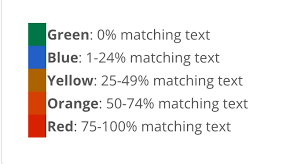
A similarity score is the percentage of text in a document that matches content already found in databases, journals, websites, student papers, or previously published research.
Importantly, a high similarity score does not automatically mean plagiarism.
These systems identify matching strings of text, not intent. References, technical terminology, standard methodological descriptions, correctly quoted passages, and even common academic phrasing can all increase the score. In some disciplines, particularly scientific and technical fields, a certain level of overlap is expected.
At the same time, a low score is not a guarantee of originality or quality.
Many institutions therefore examine where the matches occur, how extensive they are, and whether the wording has been appropriately paraphrased, cited, or contextualised. Human judgement still matters.
Researchers should also be aware that AI-generated or AI-assisted writing can create unexpected similarity issues. Large language models often reproduce predictable phrasing patterns that resemble existing online material or published texts, even when this is unintentional.
So what can authors do?
- Understand your institution’s policies and acceptable thresholds
- Avoid copying standard text from previous publications without attribution
- Use careful paraphrasing rather than superficial word substitution
- Check citations and quotation formatting carefully
- Have manuscripts reviewed before submission — especially when using AI-assisted drafting or translation tools
Ultimately, similarity checking is not simply about “passing software”. It is about demonstrating transparency, originality, and academic credibility in a global research environment.