
Darren Chastney | 3 June 2026
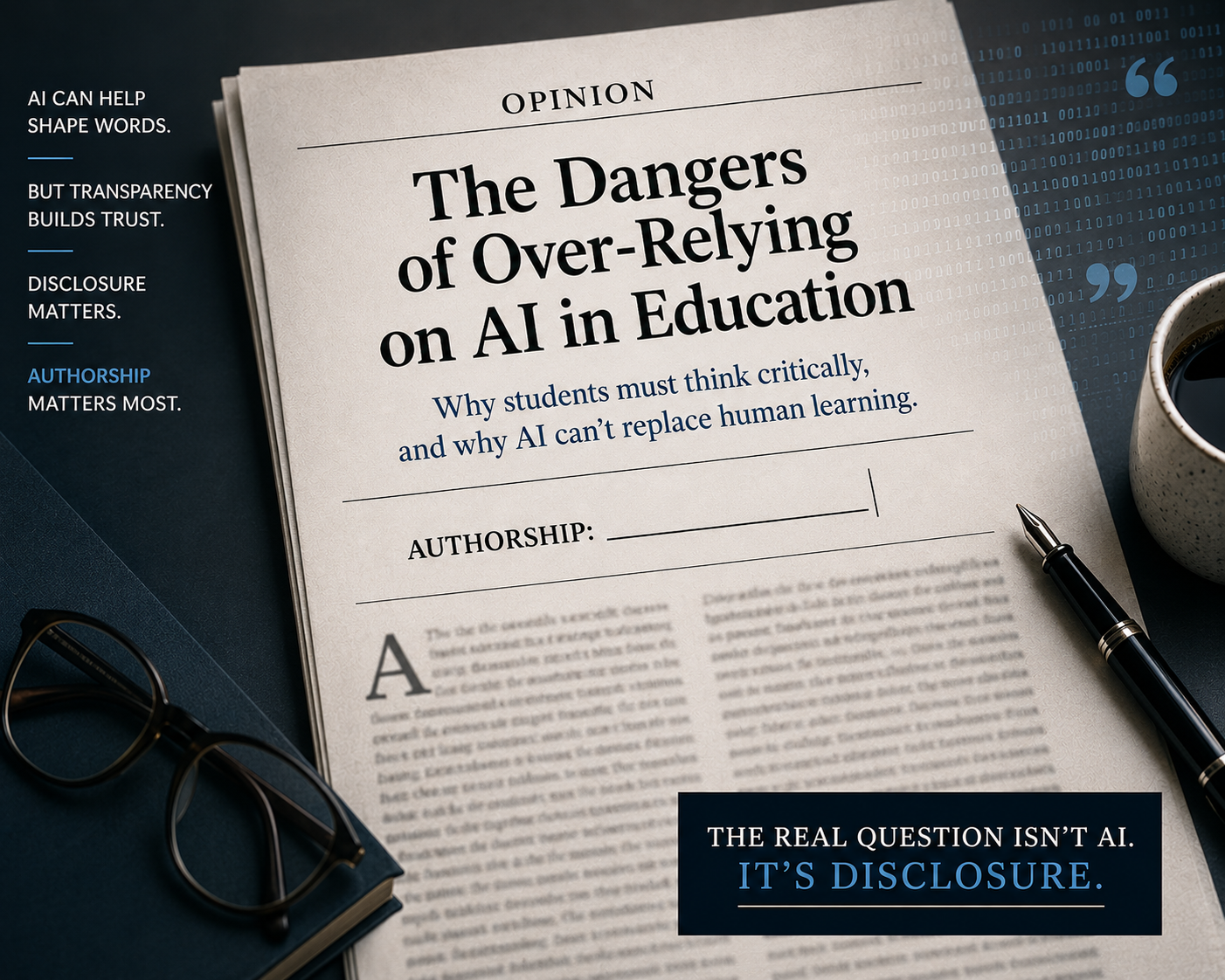
A recent controversy in Australia has sparked intense debate after a university academic reportedly used AI to help draft a newspaper opinion piece that warned students against relying on AI in their academic work.
Predictably, accusations of hypocrisy followed.
But I think many people are focusing on the wrong issue.
According to reports, the academic did not simply ask an AI tool to generate an article from scratch. Instead, she reportedly supplied tens of thousands of words from her own previous research and writing, using AI to help produce a shorter opinion piece based on ideas she had already developed.
That raises a more interesting question.
If the ideas are yours, the research is yours, the evidence is yours, and the intellectual framework is yours, who is the author?
The academic?
The AI?
Or both?
For me, the real issue is not whether AI was used. AI-assisted writing is already becoming commonplace in universities, publishing, journalism, and business communication. The more important question is whether readers, editors, and publishers are informed about how it was used.
In other words, this is fundamentally a question of transparency.
For decades, writers have worked with editors, proofreaders, translators, research assistants, and even ghostwriters. AI is simply a new participant in that ecosystem. What matters is understanding its role in the final product.
As AI becomes increasingly embedded in professional writing, demands for absolute “human-only” content may become less realistic. Clear disclosure standards, however, are both achievable and necessary.
The future debate may not be about proving a text is entirely human.
It may be about ensuring readers know who — or what — helped create it.
Source:
The Guardian, 3 June 2026
https://www.theguardian.com/australia-news/2026/jun/03/sydney-academic-used-ai-opinion-piece-urging-students-to-avoid-using-it-ntwnfb