
AI Doesn’t Just Learn From Authors. It Learns From Researchers Too.
When people talk about the copyright implications of artificial intelligence, the conversation usually centres on novelists, journalists, musicians, and artists. But there is another group whose work has quietly become part of the AI story: Researchers. Every journal article, conference paper, textbook chapter, and academic publication represents years of specialised work. Behind each publication are […]
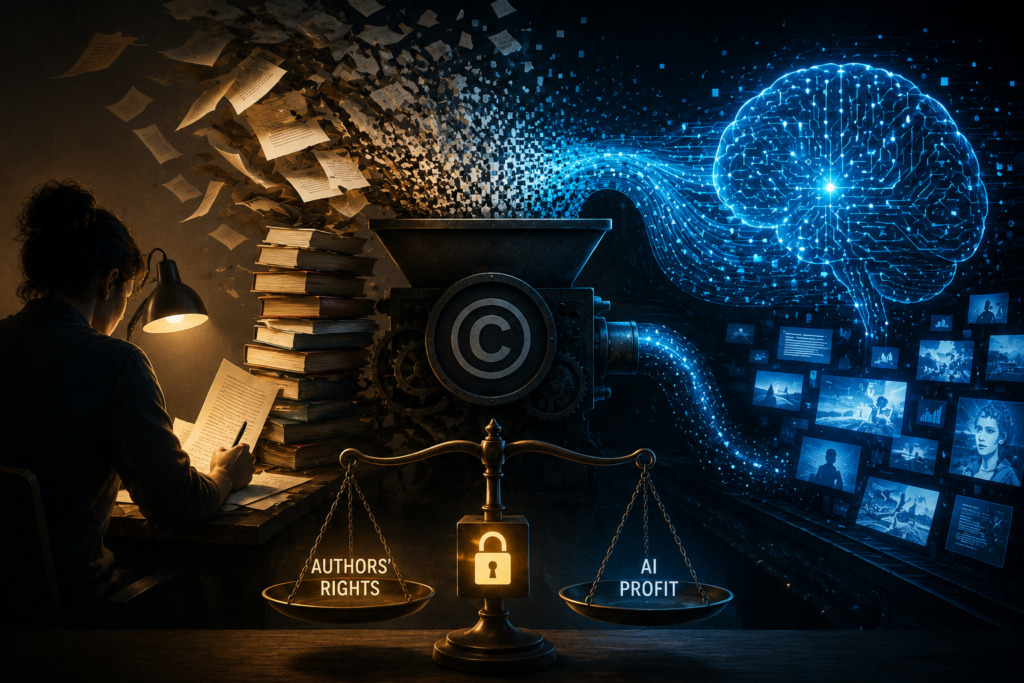
AI and Authors’ Rights: Can Innovation and Fairness Coexist?
Artificial intelligence is transforming the way we create, publish, translate, and consume content. Yet one of the most important questions remains unresolved: Who should benefit when AI systems are trained on the work of others? As part of my current editorial work with LITA (the Slovak Literary and Information Centre), I have been following ongoing […]
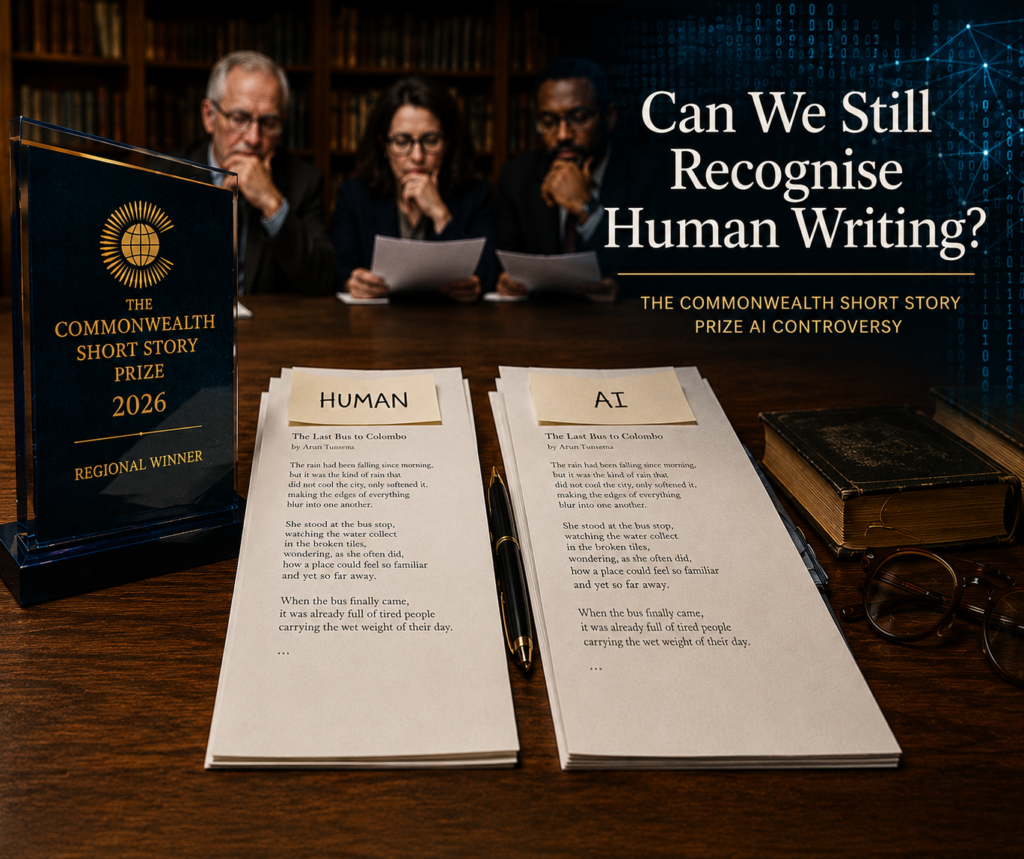
If Even Literary Prize Judges Can’t Tell, What Happens Next?
Darren Chastney | 28 May 2026 A major literary controversy last week has raised an uncomfortable question for publishers, prize judges, and readers alike: Can we still reliably tell the difference between human writing and AI-generated fiction? The debate emerged after concerns were raised over one of the regional winners of the 2026 Commonwealth Short […]
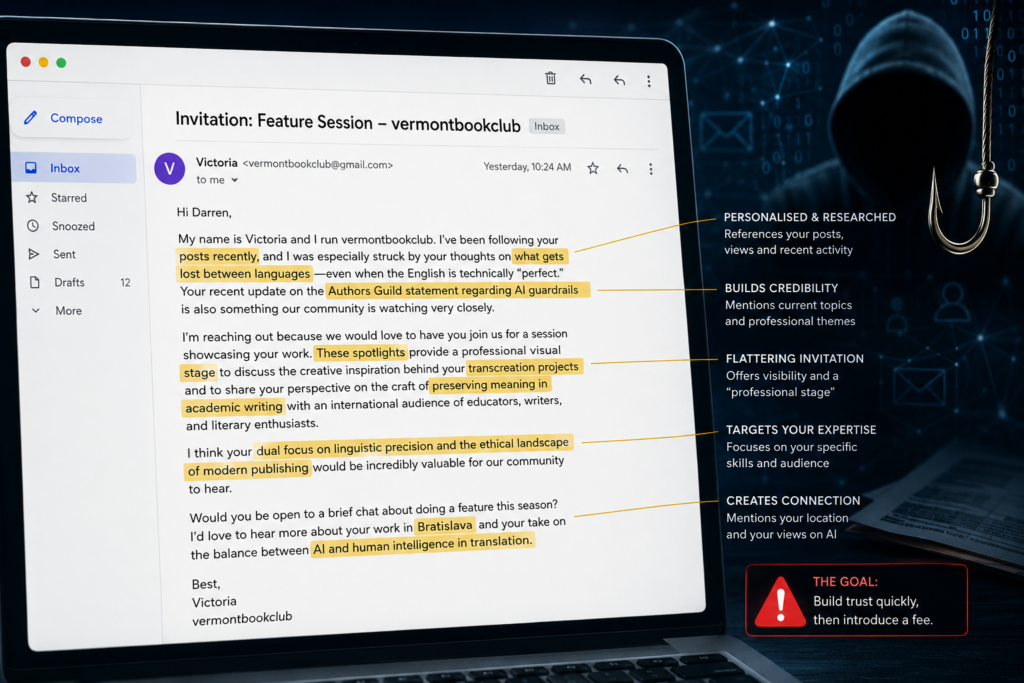
“Book Club” Scam Targets Content Producers
Darren Chastney May 25, 2026 A few days ago, I received an email from someone claiming to run a literary organisation called “vermontbookclub”. At first glance, it looked entirely legitimate. The sender referenced my recent posts about AI guardrails, translation ethics, and the challenges of preserving meaning between languages. They mentioned my work in Bratislava, […]
The Uncanny Valley of Academic Similarity Scores
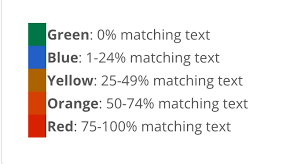
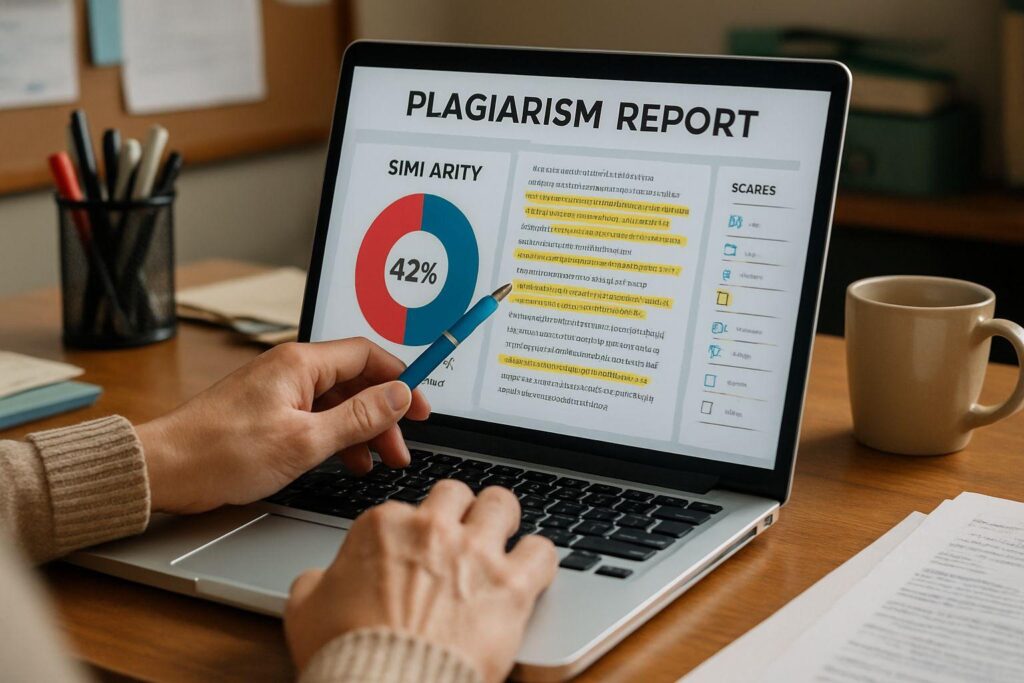
What Is a “Similarity Score” — and Why Should Researchers Care? Many researchers are familiar with plagiarism detection software such as Turnitin or iThenticate, but fewer fully understand what a similarity score actually means. A similarity score is the percentage of text in a document that matches content already found in databases, journals, websites, student […]
When AI Runs the Risk of Reputational Damage
The rapid adoption of generative AI in higher education has introduced a new and evolving risk: the intersection of AI-assisted writing and increasingly sophisticated detection systems. While AI tools are widely used to support drafting and editing, universities are simultaneously expanding the use of AI-detection technologies to identify undeclared machine-generated content. Recent reporting indicates thousands […]

What Reviewers Really Notice (Even If They Don’t Say It)
When a paper is reviewed, feedback usually focuses on the big things: methodology, argumentation, contribution. But smaller language issues often play a quieter role in how that work is perceived. Not necessarily consciously—and not always explicitly stated. A sentence that is slightly ambiguous.A claim that feels just a little too strong.An explanation that requires a […]

AI-poetry: more human than human?
AI Poetry: Revolutionizing Perceptions of Creativity A groundbreaking study has revealed that AI-generated poetry is rated more favorably than classic works by human poets like Shakespeare or Dickinson. Non-expert readers were largely unable to distinguish AI poems from human-authored ones, with many perceiving AI creations as “more human than human.” The study found that AI […]

AI vs. Translators: The Human Touch in a Machine-Led World
Machine translation, like pointing your phone at a foreign menu, has rapidly improved, yet its role in literary translation sparks debate. Dutch publisher Veen Bosch & Keuning’s plan to use AI for commercial fiction faced backlash from authors and translators, highlighting the nuanced craft of translation: cultural adaptation, wordplay, and precise terminology. Translators argue AI’s […]