
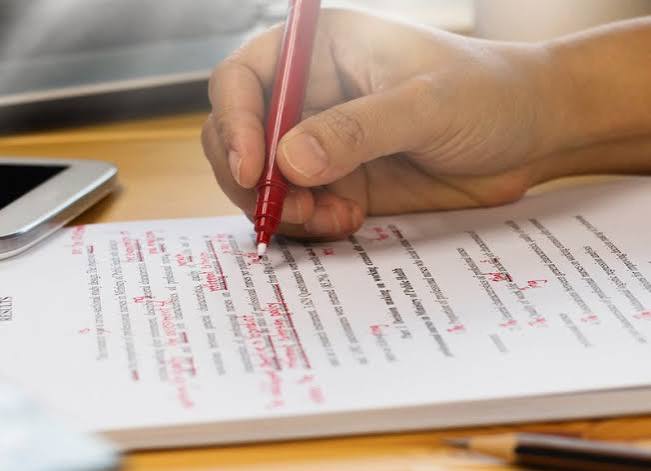
AI has become an increasingly common part of the academic writing process. Researchers use it to generate ideas, improve readability, summarise literature, refine drafts and check grammar. In many cases, these tools can save considerable time and effort.
Given this, I was intrigued by a recent proofreading request that arrived in my inbox.
Alongside the manuscript, the authors included a specific instruction: please do not use AI-based proofreading tools.
The request was not driven by scepticism about technology. The authors had already experimented with AI proofreading and found the results disappointing. According to their experience, some linguistic issues remained unresolved, formatting was occasionally affected, and reviewers later identified language problems that had escaped detection. For this manuscript, they wanted the review to be carried out manually and relied instead on the judgement of an experienced native English editor.
Their request reflects a question that many researchers are currently grappling with: if AI can write, edit and proofread text, why do so many authors still seek human proofreading before submission?
Proofreading is about more than grammar
When people think about proofreading, they often imagine correcting spelling mistakes, punctuation and obvious grammatical errors.
In reality, the issues that attract reviewers’ attention are often much subtler.
The authors attached examples of previous reviewer comments. Some related to missing articles such as “the”. Others identified incomplete sentences, missing words, awkward phrasing or unclear distinctions between different organisations and policy processes. None of these were major errors. Most readers would probably have understood the intended meaning.
Yet these are precisely the kinds of issues that reviewers notice.
The challenge is not simply whether a sentence is grammatically correct. It is whether it reads naturally, conveys the intended meaning and leaves no room for ambiguity.
Small details can have a big impact
One of the specific requests concerned terminology.
The manuscript used the term nature-based governance, and the authors wanted to ensure that it was hyphenated consistently throughout the paper.
At first glance, this may seem a trivial editorial matter. It isn’t.
Researchers invest significant effort in defining concepts and building arguments. When key terms appear in different forms throughout a manuscript, readers can become distracted or uncertain. Consistency helps establish clarity and credibility.
The same applies to capitalisation, abbreviations, institutional names and specialist terminology. These details rarely attract attention when they are correct. They often attract attention when they are not.
A good proofreader is not simply looking for mistakes. They are looking for anything that may interrupt the reader’s understanding.
Reviewer expectations are often underestimated
Many authors assume that reviewers focus primarily on the science.
Of course, the quality of the research is central. But reviewers are also reading a manuscript as a piece of communication. If the writing is unclear, inconsistent or awkward, it can affect their confidence in the paper.
That does not mean reviewers consciously penalise authors for minor language issues. Rather, uncertainty in the writing can create uncertainty in the reading experience.
I’ve seen this many times. A manuscript may contain excellent research, but if the language lacks precision, reviewers often spend more time trying to interpret the text than engaging with the underlying ideas.
Good editing helps remove that friction.
Where AI helps, and where it struggles
AI tools are remarkably useful for many aspects of academic writing.
They can identify obvious errors, improve sentence structure and suggest clearer wording. For researchers writing in a second language, they can be particularly valuable.
But there is a difference between improving language and exercising editorial judgement.
Consider a sentence that is technically correct but slightly misleading. Or a paragraph that uses the same term in three different ways. Or an argument that makes perfect sense to the authors but is unlikely to make sense to a reviewer encountering it for the first time.
These are not straightforward grammar problems.
They require someone to ask: “Is this really what the author means?” and “Will a reader interpret this as intended?”
That is where experienced human editors continue to provide value.
The value of a second pair of eyes
Perhaps the most interesting aspect of the request was not the instruction to avoid AI. It was the implicit recognition that proofreading is ultimately a human exercise.
By the time a manuscript reaches its final stages, most authors are too familiar with their own text to read it objectively. They know what they meant to write and unconsciously fill in gaps that readers may not. Every researcher experiences this.
A proofreader approaches the manuscript differently. They read it as someone encountering the work for the first time. They notice missing words, inconsistencies and unclear passages precisely because they do not already know what the authors intended to say.
That fresh perspective remains one of the most valuable parts of the editing process.
Human judgement still matters
The rise of AI has undoubtedly changed academic writing, and for the better in many respects. Most researchers will continue incorporating AI tools into their workflows, and the quality of those tools will continue to improve.
Yet the request that accompanied this manuscript serves as a useful reminder.
Researchers are not always looking for grammar correction alone. They are looking for reassurance that their ideas are being communicated clearly, consistently and professionally. They want someone who can recognise when a sentence is technically correct but still awkward, when terminology becomes inconsistent, or when an argument needs clarification rather than rephrasing.
In short, they are looking for judgement.
AI can help authors write faster. It can help them polish a draft. It can even help them spot many common errors.
But when a manuscript is about to be sent for peer review, many researchers still find comfort in knowing that another human has read every page carefully and asked the simplest of questions:
“Will this make sense to the reader?”
For now, at least, that remains a question that many scholars still prefer a person to answer.