When people talk about the copyright implications of artificial intelligence, the conversation usually centres on novelists, journalists, musicians, and artists.
But there is another group whose work has quietly become part of the AI story:
Researchers.
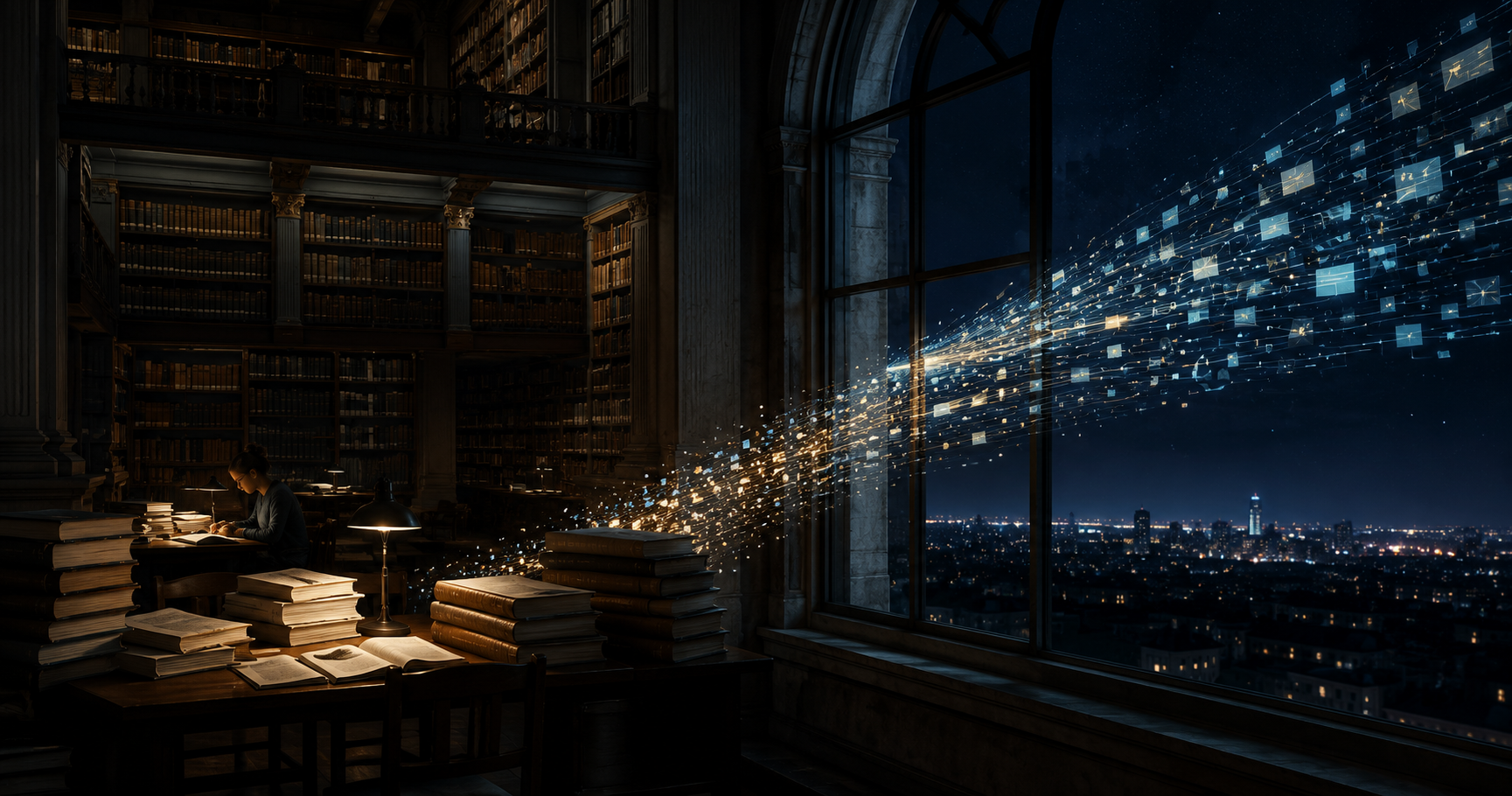
Every journal article, conference paper, textbook chapter, and academic publication represents years of specialised work. Behind each publication are countless hours of experiments, data collection, analysis, peer review, revisions, and intellectual effort.
Yet many of these publications have also found their way into the vast pools of data used to train large language models.
The debate is no longer simply about whether AI can generate convincing text. Increasingly, it is about where that capability comes from.
Who created the knowledge that made these systems so effective?
As part of my current editorial work with LITA, I’ve been following discussions about the impact of AI on authors’ rights. Organisations representing writers have rightly raised concerns about consent, transparency, and remuneration when copyrighted works are used to train AI systems.
But the same questions apply to academia.
Should researchers know whether their publications have been used in AI training datasets? Should there be clearer opt-out mechanisms? Should there be licensing models or collective agreements that recognise the value of scholarly contributions?
None of these questions have easy answers.
AI has enormous potential to support research, accelerate discovery, and broaden access to knowledge. At the same time, innovation cannot depend indefinitely on the largely invisible contribution of people whose work helped build these systems in the first place.
The future of AI should not be framed as a choice between progress and protection.
The real challenge is ensuring that innovation advances alongside fairness, transparency, and respect for the people who create knowledge.
Because AI didn’t learn in a vacuum.
It learned from us.